Bank Web Application - ReactApp
In this section, we get the bank-web-app up and running.
This web app developed using Next.js.
Next.js is a React Framework for application development.
It supports developers in building features needed for production.
You can find more about Next.js in their official website.
To run the Bank web application, open a new terminal in the bank-web-app directory and execute following code snnipets.
First, we install all dependencies for ReactApp.
Prerequisites
As shown in the layered architecture, the Bank web app communicates with both the Blockchain and the Bank server.
1. Blockchain - Before starting the Bank web application, compile and deploy your smart contracts to the Blockchain.
The Bank web application uses the smart contracts’ ABIs and deployed contract addresses in the blockchain/build/contracts directory.
This blockchain/build directory is automatically generated when you compile smart contracts.
Smart contracts will be compiled before deploy(migrate) into the Blockchain.
2. Bank Server - The Bank web app fetches data from the Bank web server. Run the Bank web server before running the Bank web app; otherwise, there could be unexpected errors.
Install Bank Web Application Dependencies
Execute all following commands in the terminal you’ve opened in the bank-web-app directory.
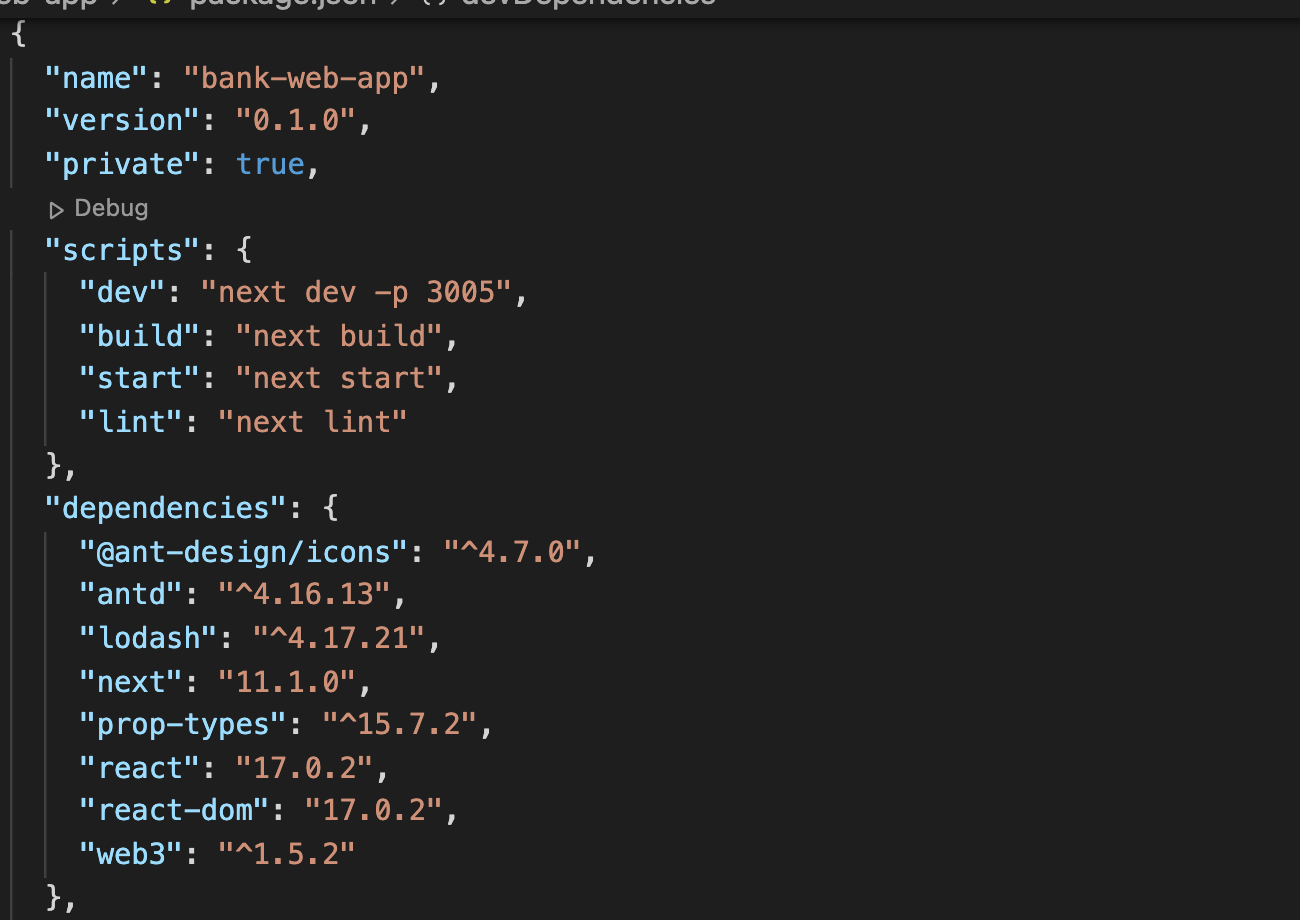
All the Bank Web Application dependencies are configured in the package.json file in the bank-web-app
directory as follows:
You can use the following command to install all dependencies:
npm install
Run Bank Web Application
After successfully installing all dependencies, run the following command to start the Bank Web Application.
You can use the same terminal in the bank-web-app directory which was used to run the above command:
npm run dev
This command starts the Bank Web Application on network port 3005 in your machine.
Before running this command, make sure your network port
3005 is free for use. If any process already running on network port 3005,
you can kill the process and run the above command again.
As shown in the image above, this port was configured in the package.json file in the bank-web-app directory.
You may replace 3005 with any desired port in the scripts.dev value.
You may try this method instead of killing the process on port 3005 if it is occupied.
If all commands execute successfully, you may access the Bank Web Application from your browser.
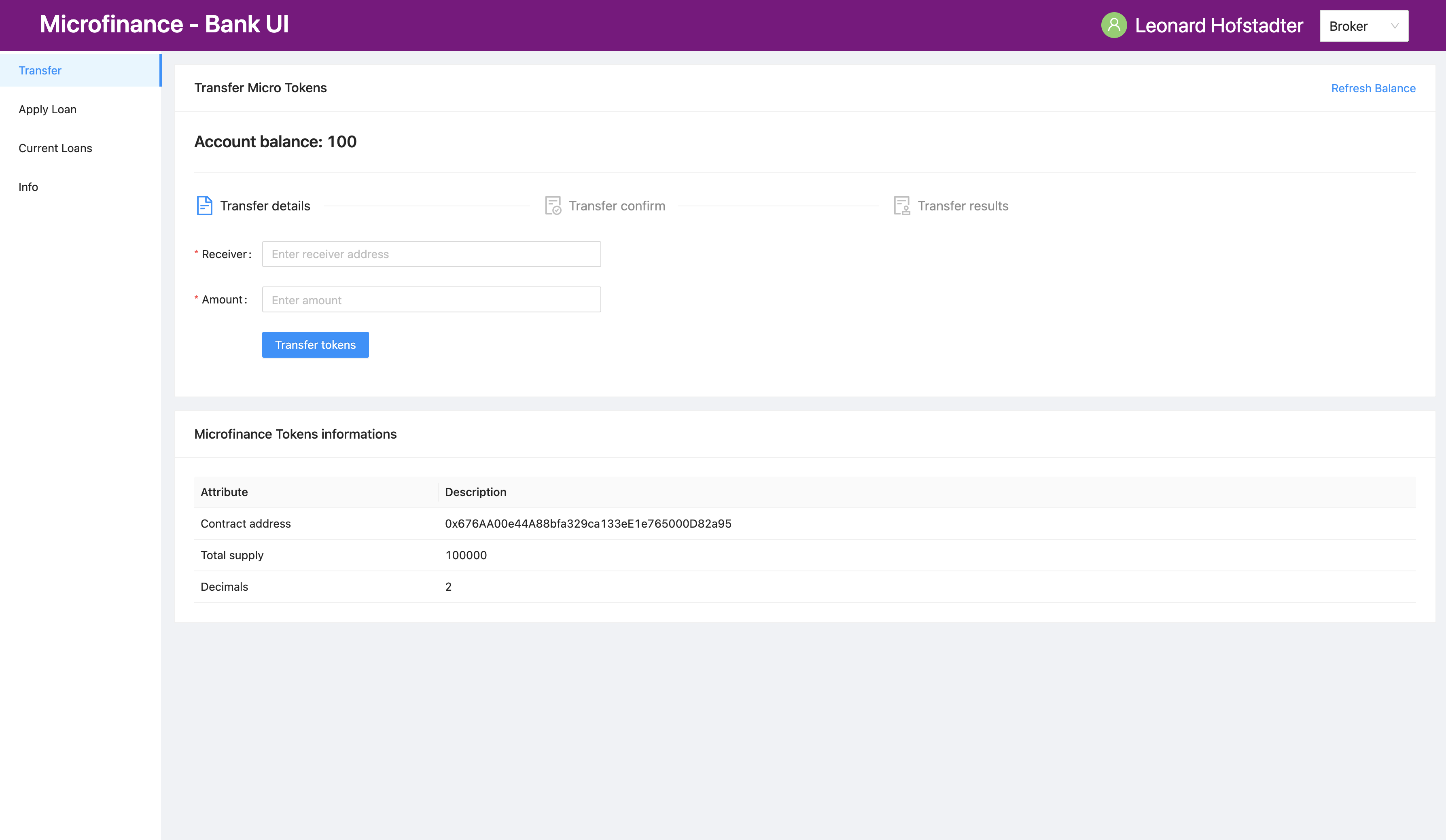
Open a Google Chrome browser, go to localhost:3005, and you can see the following UI: